Professional Excavation Services
When pipes fail beyond repair, we dig smart, work safe, and restore completely. Your property is in expert hands.
SAFETY FIRST: Licensed • Insured • OSHA Compliant • Call Before You Dig Certified
When is Excavation the Right Solution?
Excavation is serious work, but sometimes it's the only way to permanently solve underground problems. Here's when it makes sense.
Fully failed lateral
CriticalSewer line has collapsed, is partially sinking, or has separated badly enough that flow is gone. Call when any of these appear.
Warning Signs:
- Yard sinkhole right over the pipe path
- Chronic wet spot between house and street
- Sewage surfacing in the yard
- Foundation cracks appearing on the line side of the house
Timeline:
Dig within days
Our Approach:
Open trench or pipe bursting, depending on what the camera shows
Repeat clogs in the same spot
ModerateYou've had the line cabled or jetted twice or three times in a year or two, at roughly the same footage mark. Something structural is causing it to recur.
Warning Signs:
- Same clog every 6-12 months
- Camera shows offset joint, belly, or repeating root intrusion
- Cabling clears it but doesn't fix it
Timeline:
Plan within 30-60 days
Our Approach:
Camera locate, then spot repair or trenchless lining based on conditions
Aging water service line
PlannedLead or galvanized service line from the curb stop to the house is past its useful life. Replace now, on your timeline, instead of after a mid-winter failure.
Warning Signs:
- House is 60+ years old and has never had the service replaced
- Pressure is chronically lower than the street pressure
- You've had multiple pinhole leaks in the home
Timeline:
Plan for spring or fall weather windows
Our Approach:
Trenchless pull-through where the run allows; otherwise open trench
New construction or addition
PlannedAdding a second bathroom, a basement kitchen, a new garage, or a pool requires either a branch off an existing line or a new run to the main.
Warning Signs:
- Permitted construction underway
- New fixtures being added more than 20 ft from the existing stack
- Existing line is too small for added load
Timeline:
Coordinate with the GC's schedule
Our Approach:
Excavation integrated into the construction rough-in sequence
Smart Excavation Approaches

Open-trench excavation
Bellied pipes that need re-pitching, multiple fail points in one line, shallow laterals, situations where you need visual verification of surrounding conditions.
Mini-excavator and hand work to expose the line, remove the damaged section, install new pipe with proper slope, backfill with compacted material, and restore the surface.
Advantages:
- Direct eyes on surrounding soil, joints, and utilities
- Best option for re-pitching bellies and correcting slope
- Often the most cost-effective for short runs near a cleanout
- Allows re-routing around problem areas
Considerations:
- Yard, sidewalk, or driveway disruption during the dig
- Restoration adds days to the project timeline
- Weather-sensitive in winter and heavy rain
- Tight lots limit equipment size and access
Typical Timeframe:
2–5 days including restoration
Restoration:
Topsoil, seed, and hardscape restoration included in the quote

Trenchless (pipe bursting or lining)
Lines under driveways, sidewalks, mature landscaping, or slate walks — anywhere restoration would cost more than the repair itself.
Two access pits — one at each end of the run. For bursting, we winch a cone through while pulling new HDPE pipe behind it. For lining, we invert a resin liner that cures in place.
Advantages:
- No long trench — lawn, driveway, and hardscape stay intact
- 1–2 days on site typically
- Works in winter when open excavation is painful
- Often cheaper than open trench once restoration is included
Considerations:
- Higher upfront pipe cost (lower total cost after restoration)
- Requires a line that's generally in the right shape
- Two access pits still needed
- Not every lateral qualifies — we camera first to decide
Typical Timeframe:
1–2 days on site
Restoration:
Access pits only — no long trench to restore

Targeted spot repair
A single known issue point — an offset joint, a crushed section, a tree root intrusion — where the rest of the line is still in good shape.
Camera-locate the specific fault, mark it precisely from above ground, dig a small test pit exactly there, repair, backfill, restore.
Advantages:
- Small footprint — often a 3x4 ft pit
- Preserves the rest of the line
- Lowest cost when the issue is truly isolated
- Fast — often one-day in and out
Considerations:
- Depends on accurate camera-locating
- Other undiscovered issues may emerge later
- Not all faults are repairable this way (collapses need more)
- Still requires careful utility locating before digging
Typical Timeframe:
1 day
Restoration:
Small pit restoration only
Our Excavation Process
Experience our systematic approach to safe and efficient excavation
Excavation Process
Step 1 of 5
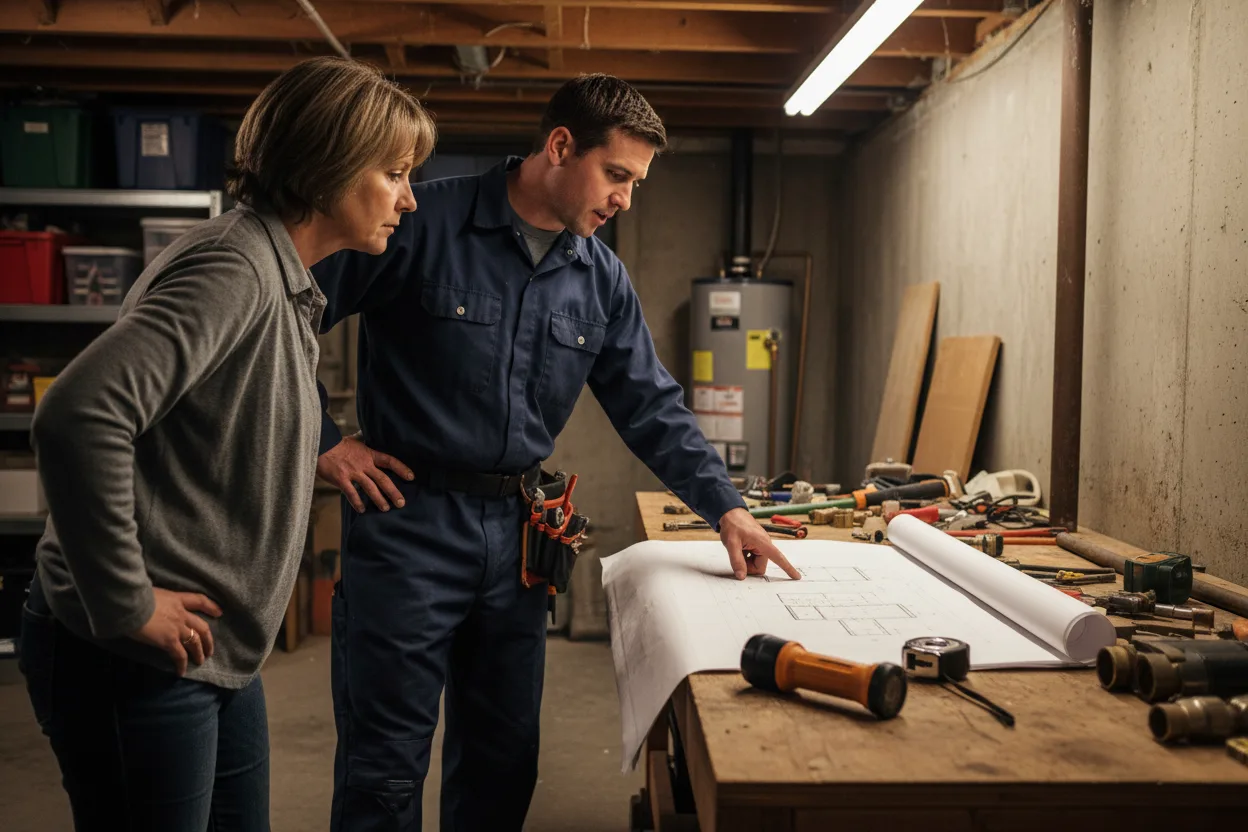
Pre-Excavation Planning
Comprehensive site assessment and utility location
+ 1 more activities...
Swipe left or right to navigate • Tap dots to jump to step

Safety is Non-Negotiable
Excavation work carries serious risks. We follow strict safety protocols to protect our workers, your property, and your family.
Utility Protection
- Professional utility locating services
- Hand digging within 18 inches of marked utilities
- Electronic detection equipment
- Coordination with utility companies
Trench Safety
- Proper slope angles (OSHA compliant)
- Trench boxes and shoring systems
- Continuous atmosphere monitoring
- Safe entry and exit points
Property Protection
- Protective barriers around landscaping
- Driveway and walkway protection
- Foundation monitoring
- Sprinkler system safeguards
Environmental Safety
- Soil contamination testing
- Proper waste disposal
- Erosion control measures
- Groundwater protection protocols
Understanding Excavation Costs
Every excavation project is unique. Here are the key factors that influence pricing so you can understand what goes into your estimate.
Excavation Depth
High ImpactDeeper excavations require more safety measures and equipment
Typical: 6-12 feet for main lines
Soil Conditions
High ImpactRocky, clay, or unstable soils increase complexity
Typical: Varies by location
Access Difficulty
Medium ImpactTight spaces or poor access increase labor time
Typical: Standard yard access
Utility Density
Medium ImpactMultiple utilities require careful hand digging
Typical: Typical residential density
Restoration Scope
Medium ImpactLandscaping, driveways, and hardscaping repairs
Typical: Basic lawn restoration
Permit Requirements
Low ImpactMunicipal permits and inspection fees
Typical: $100-500 depending on scope
Our Pricing Promise
We believe in transparency. You'll know exactly what you're paying for and why.
Ready to Solve Your Underground Problems?
From urgent repairs to planned upgrades, we handle excavation projects with precision, safety, and care for your property.
Licensed & Insured • OSHA Compliant • Complete Restoration Included • 1-Year Warranty